
Treasury Regulations · 26 CFR
§ 31.3121(s)-1. Concurrent employment by related corporations with common paymaster.
Regulation text, no changes From the eCFR, current as of October 15, 2026. The eCFR is an authoritative but unofficial editorial compilation of the Code of Federal Regulations; the official text is the annual CFR on govinfo. Compare it with this section on ecfr.gov (external site) or the official annual CFR on govinfo (external site).
Regulation under 26 U.S.C. § 3121(s)
Cite as 26 CFR § 31.3121(s)-1
At a glance
Read from the text and its source citation. Not part of the regulation.
- Status
- In the current eCFR
- Issued
- December 19, 1979 by T.D. 7660
- Last amended
- August 4, 2009 by T.D. 9456
- Issued under
- 26 U.S.C. § 3121(s)
- Length
- 3,489 words · about 15 min to read
- Defines
- 1 term
- Cross-references
- cites 4 Code sections and 4 regulations; cited by 4
The following examples illustrate the application of this paragraph:
(a) X Corporation employs individuals A, B, D, E, F, G, and H. Y Corporation employs individuals A, B, and C. Z Corporation employs individuals A, C, I, J, K, L, and M. X Corporation is the paymaster for all thirteen individuals. The corporations have no officers or stockholders in common.
(b) X and Y are related corporations because at least 30 percent of Y's employees are also employees of X. Y and Z are related corporations because at least 30 percent of Y's employees are also employees of Z. X and Z are not related corporations because neither corporation has 30 percent of its employees concurrently employed by the other corporation.
(c) For purposes of determining the amount of the tax liability under sections 3102 and 3111, individual B is treated as having one employer. Individual C has two employers for these purposes, although Y and Z are related corporations, because C is not employed by X Corporation, the common paymaster. Individual A also is treated as having two employers for the purposes of these sections because X and Y Corporations are treated as one employer, and Z Corporation is treated as a second employer (since it is not related to the paymaster, X Corporation). Of course, individuals D, E, F, G, H, I, J, K, L, and M are not concurrently employed by two or more corporations, and, accordingly, section 3121 (s) is inapplicable to them.
M and N Corporations are both related to Corporation O but are not related to each other. Individual A is concurrently employed by all three corporations and paid by O, their common paymaster. Although M and N are not related, O is treated as the employer for A's employment with M, N, and O.
Corporations X, Y, and Z meet the definition of related corporations for the first time on April 12, 1979, and cease to meet it on July 5, 1979. A is concurrently employed by X, Y, and Z throughout 1979. In each of the four calendar quarters of 1979, A's remuneration from X, Y, and Z is $2,000, $10,000, and $30,000, respectively. All of the remuneration to A from X, Y, and Z for the year is disbursed by X, the common paymaster. Under these circumstances, the amount of wages subject to sections 3102 and 3111 is as follows:
For the first calendar quarter
| X | Y | Z |
|---|---|---|
| $2,000 | $10,000 | $22,900 |
For the second calendar quarter
| X | Y | Z |
|---|---|---|
| $20,900 | 0 | 0 |
| ($22,900−$2,000) |
For the third calendar quarter
| X | Y | Z |
|---|---|---|
| 0 | 0 | 0 |
For the fourth calendar quarter
| X | Y | Z |
|---|---|---|
| 0 | $10,000 | 0 |
Of course, if the corporations had been related throughout all of 1979, only $22,900 of X's first quarter disbursement would have constituted wages subject to sections 3102 and 3111.
S, T, U, and V are related corporations with 2,000 employees collectively. Forty of these employees are concurrently employed by two or more of the corporations, during a calendar quarter. The four corporations arrange for S to disburse remuneration to thirty of these forty employees for their services. Under these facts, S is the common paymaster of S, T, U, and V with respect to the thirty employees. S is not a common paymaster with respect to the remaining employees.
(a) W, X, Y, and Z are related corporations. The corporations collectively have 20,000 employees. Two hundred of the employees are top-level executives and managers, sixty of whom are concurrently employed by two or more of the corporations during a calendar quarter. Six thousand of the employees are skilled artisans, all of whom are concurrently employed by two or more of the corporations during the calendar year. The four corporations arrange for Z to disburse remuneration to the sixty executives who are concurrently employed by two or more of the corporations. W and X arrange for X to disburse remuneration to the artisans who are concurrently employed by W and X.
(b) A is an executive who is concurrently employed only by W, Y, and Z during the calendar year. Under these facts, Z is a common paymaster for W, Y, and Z with respect to A. Assuming that the other requirements of this section are met, the amount of the tax liability under sections 3102 and 3111 is determined as if Z were A's only employer for the calendar quarter.
(c) B is a skilled artisan who is concurrently employed only by W and X during the calendar year. Under these facts, X is a common paymaster for S and X with respect to B. Assuming that the other requirements of this section are met, the amount of the tax liability under sections 3102 and 3111 is determined as if X were B's only employer for the calendar quarter.
M, N, and O are related corporations which use N as a common paymaster with respect to officers. Their respective headquarters are located in three separate cities several hundred miles apart. A is an officer of M, N, and O who performs substantial services for each corporation. A does not work a set length of time at each corporate headquarters, and when A leaves one corporate headquarters, it is not known when A will return, although it is expected that A will return. Under these facts, A is concurrently employed by the three corporations.
P, Q, and R are related corporations whose geographical zones of business activity do not overlap. P, Q, and R have a common pension plan and arrange for Q to be a common paymaster for managers and executives. All three corporations maintain cafeterias for the use of their employees. B is a cafeteria manager who has worked at P's headquarters for 3 years. On June 1, 1980, B is transferred from P to the position of cafeteria manager of R. There are no plans for B's return to P. B's accrued pension benefits, vacation and sick pay, do not change as a result of the transfer. The decision to transfer B was made by Q, the parent corporation. Under these facts, B is not concurrently employed by P and R, because B's employment relationship with P was completely nonexistent during B's employment with R. Furthermore, section 3121(s) is inapplicable since B also was not employed by Q, the common paymaster, because B never contracted to perform services for remuneration from Q, and Q did not have the right to control the day-to-day duties of B's work.
C is employed by two related corporations, S and T. C was concurrently employed by these corporations between April 1, 1979, and June 30, 1979. The corporations used T as the common paymaster with respect to C's wages between May 1, 1979, and September 30, 1979. T pays C on May 15 for services performed between April 1 and April 30, on July 15 for services performed between June 1 and June 30, and on August 15 for services performed between July 1 and July 31. Section 3121 (s) applies to the first two payments but does not apply to the third payment (there was no concurrent employment). However, if the third payment was made by T for services performed for T, T counts the amounts previously disbursed to C in 1979 while C was concurrently employed by S and T towards the wage base (see section 3121 (a)(1)).
The portion of taxes previously paid by the common paymaster that is allocable to each related corporation is determined by multiplying the amount of taxes paid by a fraction, the numerator of which is the portion of the amount of employment tax liability of the common paymaster under section 3121(s) that is allocable to such related corporation under paragraph (c)(2) of this section, and the denominator of which is the total amount of the common paymaster's liability under section 3121(s), both determined without regard to any prior tax payments. These rules apply whether or not the tax on employees was withheld from the employees' wages.
| Portion of wage payment constituting re- | ||
| muneration to the employee for services | Tax on employees under section 3102 and | |
| performed for the corporation | tax on employers under section 3111 | |
| ——————————————————————— | × | that the common paymaster is required |
| Total wage payment constituting remu- | to remit with respect to the wage pay- | |
| neration to the employee for all services | ment | |
| performed for the related corporations | ||
| using the common paymaster |
If the remuneration disbursed to an employee for services performed for a corporation is inappropriate, the district director may adjust the remuneration records of the related corporations to reflect appropriate remuneration. The district director may use the principles of § 1.482-2(b) in making the adjustments.
(i) X and Y are related corporations which use Y as common paymaster for their executives. A is a concurrently employed executive who performs services during the first quarter of 1979 for X and Y. Y remunerates $4,000 gross pay every week to A, calculated as follows:
| Wage payments | Remuneration | Tax on employers under section 3111 | Tax on employees withheld under section 3102 | Total | ||
|---|---|---|---|---|---|---|
| X | Y | Total | ||||
| 1 | $3,000 | $1,000 | $4,000 | $245.20 | $245.20 | $490.40 |
| 2-3 | 8,000 | 8,000 | 490.40 | 490.40 | 980.80 | |
| 4 | 1,000 | 3,000 | 4,000 | 245.20 | 245.20 | 490.40 |
| 5 | 4,000 | 4,000 | 245.20 | 245.20 | 490.40 | |
| 6 | 2,000 | 2,000 | 4,000 | 177.77 | 177.77 | 355.54 |
| 7-13 | 10,000 | 18,000 | 28,000 | 0 | 0 | 0 |
| Total | 20,000 | 32,000 | 52,000 | 1,403.77 | 1,403.77 | 2,807.54 |
The amounts of remuneration to A are determined by the district director to be appropriate. Under these facts, the tax is allocated to X and Y in the following amounts:
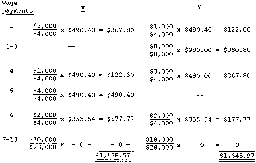
(ii) If Y remits none of the taxes to the Internal Revenue Service, X is liable for $2,452.00 (the entire amount due pursuant to sections 3102 and 3111 with respect to the remuneration to A from X) (12.26% × $20,000). Any amount remitted by X to the Internal Revenue Service under these circumstances is also credited against the liability of the common paymaster, Y. However, only the portion of the employment taxes allocated to X under (i) above may be deducted by X as employment taxes paid by it in respect of wages paid by it to its employees.
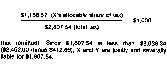
(iii) If Y remits $1,000.00 of the total $2,807.54 due, Y as common paymaster remains liable for $1,807.54 ($2,807.54 minus $1,000). X's liability is the lesser of $1,807.54 (the liability of the common paymaster), or X's total liability, in the absence of section 3121 (s), on wages paid through the common paymaster ($2,452.00) minus a credit for an allocable part of the amount remitted by Y. The part is $412.66
[T.D. 7660, 44 FR 75139, Dec. 19, 1979; 45 FR 17986, Mar. 20, 1980, as amended by T.D. 9278, 71 FR 44519, Aug. 4, 2006; T.D. 9456, 74 FR 38876, Aug. 4, 2009]
Terms defined here
Where the text says “the term … means”. Select a term to jump to its definition.
Cross-references
Computed from the citations in the text of 26 CFR.
Code sections it cites
- § 3102 Deduction of tax from wages
- § 3121 Definitions
- § 1563 Definitions and special rules
- § 3111 Rate of tax
Regulations it cites
- § 31.3306(p)-1 Employees of related corporations.
- § 31.0-2 General definitions and use of terms.
- § 1.482-2 Determination of taxable income in specific situations.
- § 1.482-9 Methods to determine taxable income in connection with a controlled services transaction.
Cited by 4 other regulations
Amendment history
From the source citation at the end of the section, newest first. T.D. is a Treasury decision; FR is the Federal Register.
- Amended by T.D. 9456 (74 FR 38876)
- Amended by T.D. 9278 (71 FR 44519)
- Amended (45 FR 17986)
- Issued by T.D. 7660 (44 FR 75139)
Where it sits in 26 CFR
- Subchapter C Employment taxes and collection of income tax at source
- Part 31 Employment taxes and collection of income tax at source
- Subpart B Federal Insurance Contributions Act (Chapter 21, Internal Revenue Code of 1954)
- General Provisions
Nearby sections
- § 31.3121(l)-1 Agreements entered into by domestic corporations with respect to foreign subsidiaries.
- § 31.3121(o)-1 Crew leader.
- § 31.3121(q)-1 Tips included for employee taxes.
- § 31.3121(r)-1 Election of coverage by religious orders.
- § 31.3121(s)-1 Concurrent employment by related corporations with common paymaster.
- § 31.3121(v)(2)-1 Treatment of amounts deferred under certain nonqualified deferred compensation plans.
- § 31.3121(v)(2)-2 Effective dates and transition rules.
- § 31.3123-1 Deductions by an employer from remuneration of an employee.
- § 31.3127-1 Exemption for employers and their employees if both are members of religious faiths opposed to participation in Social Security Act programs.